An OEM Buyer’s Guide to Low Deflection, Feel, and QC
Carbon fiber and Maple are both proven materials in cue making. However, they win in different ways. Maple has a long history. It also has a classic, warm feel. Carbon fiber is modern. It is stable, repeatable, and easy to tune at scale.
For most cue brands, the real question is not “Which is better?” Instead, it is this: Which material helps you hit your target player feel, low-deflection goals, and quality consistency—while protecting your margins and warranty risk?
This guide is written for cue brands, cue makers, OEM/ODM buyers, and distributors. It explains how carbon fiber cue shafts compare with maple cue shafts in the areas that drive real buying decisions: low deflection, hit feel, straightness stability, manufacturing control, and QC standards. In addition, you will receive a clear sourcing checklist and an RFQ template you can send to a cue shaft OEM.
Why This Comparison Matters for OEM Programs
If you buy shafts at scale, you know the problem. Players want consistency. Meanwhile, raw materials vary. That is where carbon fiber and Maple separate.
Maple is a natural material. So, it has natural variation. Carbon fiber is engineered. Therefore, it can be more repeatable. That matters for:
- product reviews and word of mouth
- return rates and warranty claims
- batch-to-batch “feel” consistency
- long-term supply planning
In addition, brands now compete in “low deflection” categories. Material choice directly affects your market position.
Carbon Fiber vs Maple: The Real Differences
Density and Mass Distribution (Why Balance Changes)
Carbon fiber composites are much lighter than wood for the same level of stiffness in many designs. However, cue feel depends on where the mass sits, not just total mass.
In practice:
- Maple shafts often have greater natural mass at the front end.
- Carbon fiber shafts can be built with lower front-end mass.
Therefore, carbon fiber provides greater control over cue balance. It also helps you tune swing weight for different player types.
Material Structure (Natural vs Engineered)
Maple is a biological structure. It is strong, but it varies by:
- grain pattern
- moisture content
- growth density
- internal micro-defects
Carbon fiber shafts are engineered laminates. They can be tuned by:
- fiber angle selection
- wall thickness control
- resin system choice
- taper and machining strategy
As a result, carbon fiber provides OEM programs with additional design levers.
Climate Stability (Humidity and Warpage Risk)
Maple can move with humidity. That does not mean “all wood warps.” Still, it is a real risk over time. It becomes a bigger risk during:
- shipping and storage
- seasonal humidity swings
- frequent travel between climates
Carbon fiber is far less sensitive to humidity. Therefore, it is often chosen for customers who demand long-term stability.
Low Deflection: What Buyers Should Know
Low deflection is not a single spec. Instead, it is an outcome shaped by:
- front-end mass
- tip-section stiffness
- taper geometry
- ferrule and tip setup
- cue ball contact behavior
Why Carbon Fiber Often Makes Low Deflection Easier
Carbon fiber cue shaft blanks can be engineered to keep the front end light while maintaining stiffness. Therefore, many brands can reach “low deflection” performance without adding heavy cores or unusual front structures.
Additionally, carbon fiber enables more consistent production. If you tune one model to a target feel, you can hold it more consistently at volume.
Maple Can Also Be Low Deflection, But Control Is Harder
Maple low-deflection shafts are possible. However, they often require more selection and matching. In addition, wood variation can cause:
- wider stiffness spread
- Subtle feel changes between batches
- more sorting and QC effort
So, Maple can achieve performance. Yet, carbon fiber often reduces variability risk.
Feel and Feedback: Crisp vs Warm (And Why It’s Not “One Feel”)
Players talk about “feel.” However, feel is a mix of vibration, stiffness, surface friction, and sound.
Typical Feel Trends
- Maple often feels warm and classic.
- Carbon fiber often feels clean and crisp.
However, both can be tuned. In fact, many carbon fiber shafts are designed to reduce “ring” and deliver a controlled hit.
What Controls Feel in Carbon Fiber Shafts
Carbon fiber is not one feel. The OEM can tune:
- fiber angles (axial vs torsional response)
- wall thickness (tip and mid-section)
- taper profile (pro taper behavior)
- resin content and cure quality
- surface finish (drag and hand feel)
Therefore, carbon fiber is a platform for multiple “hit profiles.” That is attractive for brands with multiple SKUs.
Surface Drag and Bridge Comfort
Surface feel is enormous. It affects the bridge hand. It also affects confidence.
Maple typically uses a smooth, sealed finish. It can feel very nice. Yet, humidity can change how it slides.
Carbon fiber canbe used for:
- matte clear coat
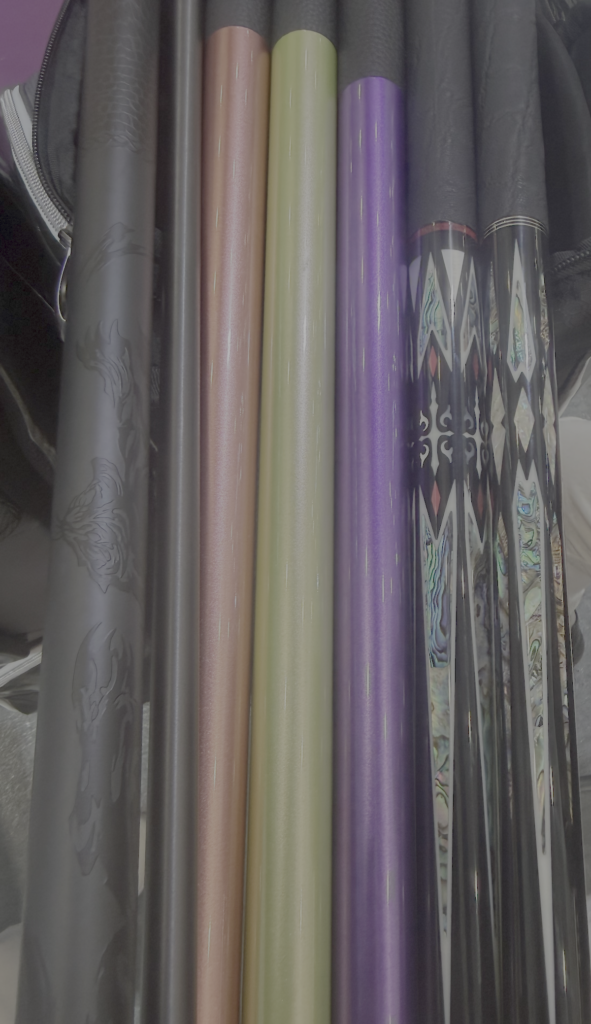
- satin clear coat
- controlled micro-texture
Therefore, you can build “low drag” behavior that stays stable in different rooms and climates.
Straightness, Runout, and Repeatability
Straightness is a quality signal. It is also a performance factor.
Maple: Selection and Sorting Matter
Maple shafts depend heavily on:
- wood selection and seasoning
- turning process control
- long-term storage conditions
- straightness sorting and matching
Great makers can do this well. However, it takes effort. It also depends on the quality of the raw stock.
Carbon Fiber: Process Control Matters
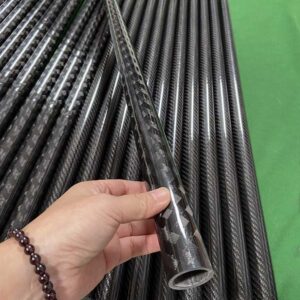
Carbon fiber shaft straightness depends on manufacturing control, such as:
- mandrel accuracy
- layup tension control
- cure stability
- post-cure handling
- machining alignment
Therefore, carbon fiber can be very consistent. Still, it requires a capable supplier.
Buyer tip: Always specify straightness and inspection method. Also, request runout measurements along the whole length.
Manufacturing Insights for OEM Buyers
Carbon Fiber Cue Shaft Manufacturing (What You Should Expect)
Most high-quality carbon fiber cue shaft blanksare produced using controlled composite processes. A serious OEM should be able to explain:
- how they control taper consistency,
- how they control wall thickness,
- how they control runout, and
- how they control finish quality
In addition, they should have reliable in-house machining and finishing capabilities.
Maple Shaft Manufacturing (What Drives Consistency)
For maple shafts, consistency depends on:
- stable moisture control
- accurate turning and sanding
- surface sealing process
- straightness checks after rest periods
A good maple supplier typically has robust sorting and aging systems.
Joint Inserts, Ferrules, and Assembly: Key OEM Differences
Most shafts use mixed materials near the joint and tip. Therefore, assembly design matters.
Carbon Fiber Inserts and Bonding
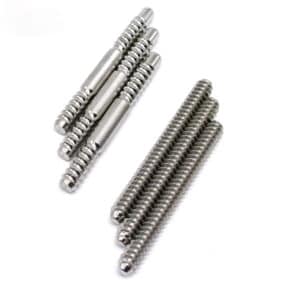
Carbon fiber shafts usually need bonded inserts or sleeves. A sound system includes:
- proper surface prep
- correct adhesive selection
- insert geometry that avoids stress spikes
- stable curing and inspection
In addition, the supplier should control the insert fit and alignment. That reduces wobble risk.
Maple Inserts and Threads
Maple can be threaded and machined more directly. Still, it canfailt if not well designed. Therefore, thread design and moisture control matter.
Quality Control: What to Require (Practical Checklist)
Because carbon fiber is process-driven, Maplele is a material variable; QC must be clear.
Carbon Fiber Cue Shaft QC (Minimum)
- OD and taper profile checks
- straightness/runout checks along the whole length
- weight checks and tolerance band
- surface inspection (pinholes, resin marks, weave distortion)
- finish consistency (gloss/matte level and texture)
- insert alignment and bond inspection
Maple Cue Shaft QC (Minimum)
- moisture content control
- grain and straightness selection criteria
- taper profile and diameter checks
- straightness checks after rest period
- finish uniformity checks
Carbon Fiber vs Maple: OEM Comparison Table
| Parameter | Carbon Fiber Cue Shaft | Maple Cue Shaft |
|---|---|---|
| Low deflection potential | High and repeatable | High possible, more variation |
| Feel profile | Crisp, tunable | Warm, classic |
| Humidity stability | Excellent | Variable by climate |
| Straightness repeatability | High with good process | Depends on selection and aging |
| Surface drag control | Highly tunable | Good, but climate affects feel |
| QC drivers | Process control | Raw stock selection + process |
| OEM scaling | Strong for volume programs | Possible, needs more sorting |
| Market positioning | Premium, modern | Traditional, premium classic |
MOQ, Lead Time, and Packaging (What Procurement Teams Ask)
MOQ and SKU Planning
Carbon fiber programs often scale well when SKU fragmentation is reduced. Therefore:
- start with a few core diameters and tapers
- scale volume
- Then expand the model range
FMapleple, the MOQ can be flexible. However, matching and sorting still take time.
Lead Time Planning
Lead time depends on:
- taper complexity
- finish requirements
- insert work
- QC and reporting depth
If you want speed, keep specs clear. Also, plan sampling early.
Packaging to Protect Straightness
Good packaging prevents returns. Use:
- individual sleeves,
- end protection caps,
- rigid outer cartons or tubes
- internal supports to prevent bending loads
- SKU + lot labels for traceability
Buyer FAQ (Short and Clear)
1) Is carbon fiber consistently lower deflection thMapleple?
Not always. However, carbon fiber enables low deflection with repeatable results. Maple can do it too, but the variation is higher.
2) Does carbon fiber feel “too stiff”?
It depends. Carbon fiber can be tuned. Layup, taper, and wall thickness decide the feel. Many OEM programs offer soft, medium, and stiff variants.
3) WiMapleple shafts warp?
Not every shaft warps. Still, humidity and storage can cause movement over time. Carbon fiber has a much lower risk.
4) Which is easier to scale for OEM?
Carbon fiber often scales better for a consistent feel and straightness. Maple needs stronger selection and matching systems.
5) What should I ask an OEM supplier first?
Ask about straightness/runout measurement, taper control, surface finish control, and insert bonding process. These decide real quality.
RFQ Checklist: Send This to Your OEM Supplier
To quote accurately, provide:
- target shaft type (playingbreak/jump)
- taper type (pro taper or custom)
- tip diameter and length
- target feel (soft/medium/stiff)
- low deflection goal (what you want to improve)
- joint pin and insert details
- surface finish (matte/satin / textured)
- straightness/runout requirement and inspection method
- forecast volume, MOQ target, and lead time needs
This reduces back-and-forth. It also speeds up sampling.
Start Your OEM Sampling Plan
If you are building a premium cue line, carbon fiber can help you deliver low deflection, stable straightness, and repeatable feel at scale. At the same time, mMapleremains a strong option for classic players and traditional models. The best brands often offer both.
We support carbon fiber cue shaft blanks, pro taper carbon fiber cue shafts, and OEM/ODM manufacturing for cue brands, cue makers, and distributors.
Send your specs now to start a fast program plan:
- drawings or target dimensions
- taper and tip specs
- desired feel profile
- joint insert details
- finish target
- volume forecast + MOQ + lead time
We will respond with a clear path: samples → feedback → pilot run → mass production, plus QC and packaging standards to protect straightness during shipping.